On 20 October 2026, Airbnb announced a new house rules policy that applies to reservations booked on or after 20 November 2026. Hosts choose from seven standard rules and can add requests, but only reasonable ones: guests can generally no longer be asked to strip the beds, wash the dishes or take the trash off the property. Fines for guests and new rules communicated after booking are not allowed. This is a platform policy, not a law. Below you will find what is changing, what you can still ask for and what to check in your listing before the deadline.
What is changing and when
As of 28 October 2026, the new policy had been announced and applies to reservations booked on or after 20 November 2026. Reservations booked before that date stay under the previous rules. Alongside it, Airbnb also updated its policy on contracts and guests’ personal data, which applies to the same reservations.
| What is changing | Status | From | What to do |
|---|---|---|---|
| The house rules editor: seven standard rules and requests | Available in the Listing editor | 20 October 2026 | Review your rules and checkout instructions |
| The reasonable house rules and requests policy | Platform policy | Reservations booked from 20 November 2026 | Remove fines and unreasonable requests |
| Contracts and personal data asked of guests | Platform policy, updated | Reservations booked from 20 November 2026 | Keep only the contracts and data that are allowed |
| Local rules that can lead to fines | Added under Requests in your listing | Available now | Describe the rule, who sets it and the fine |
The seven standard rules
Standard rules are set in the Listing editor, in the same place as your requests. Checkout instructions no longer have a separate tab: they now go under Requests, together with the instructions for the stay.
- Maximum overnight guests. How many people can stay overnight in your home. This is a new option.
- Quiet hours. When noise should be kept to a minimum.
- Events. Whether events are allowed in your home.
- Pets. Whether pets are allowed and, if so, how many.
- Smoking. Whether smoking is permitted, including vaping and e-cigarettes.
- Commercial photography. Whether commercial photography and filming are allowed.
- Lock up at checkout. Whether guests must lock up when they leave, with optional details about where to return the keys. This is also a new option.
Guests are required to follow your house rules. If a guest breaks one of them during the stay, or says before check-in that they intend to, you can cancel the reservation without fees or other consequences.
What you can and cannot ask of guests
Besides the standard rules, you can add requests for the stay and for checkout. Guests are encouraged to follow them, but every request must be reasonable. Airbnb gives these examples:
| Area | Generally not allowed | Allowed |
|---|---|---|
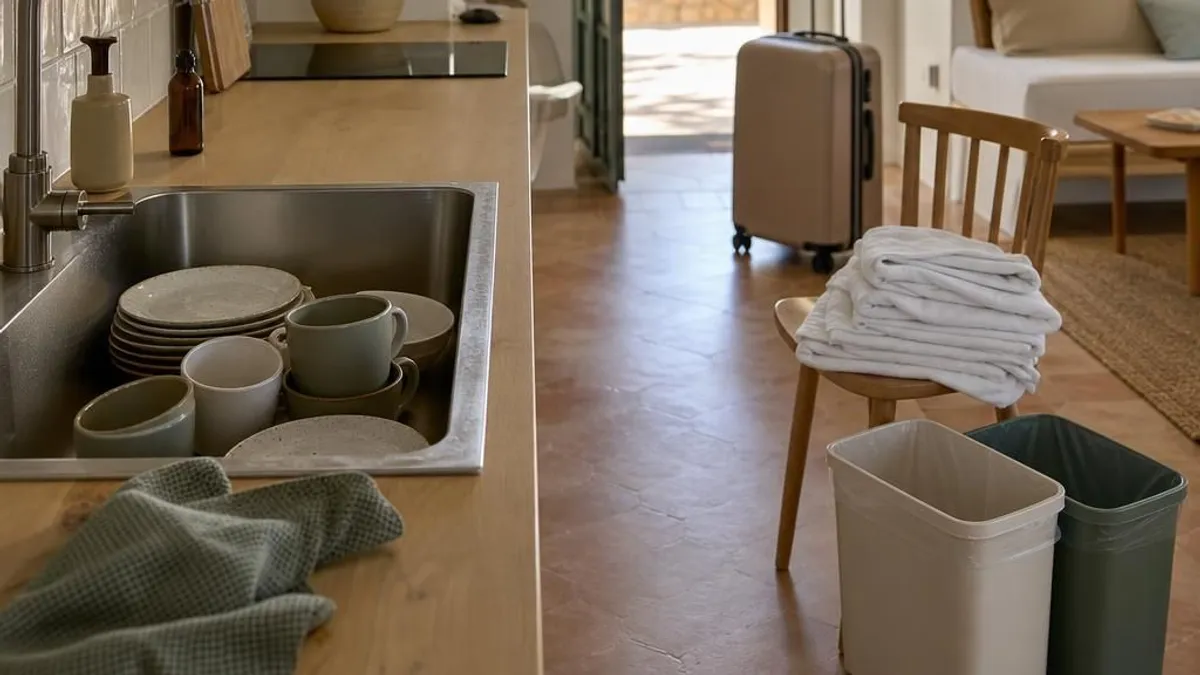
| Dishes | Washing the dishes and putting them away | Leaving used dishes in the sink |
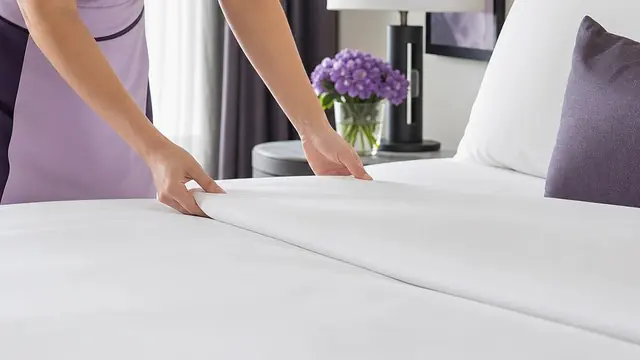
| Laundry | Stripping the beds or starting a load of laundry | Gathering used towels |
| Trash | Taking the trash off the property | Sorting trash and recycling into the indoor bins |
| Utilities | Not using a listed amenity, such as the air conditioning | Turning it off when they leave |
To decide whether a request is reasonable, Airbnb looks at the type of listing or stay and at local conditions, and it may grant exceptions. The platform’s examples: animal-proof trash containers in bear country, or shorter showers where drought has led to water restrictions. Airbnb also points out that most guests want to avoid unexpected chores, and that asking them to do what a cleaner usually does can affect their stay and your reviews. We explain how to respond to a negative review in our guide to reviews.
What is not allowed: fines, rules after booking, fees outside the price
- No fines for guests. Hosts cannot impose fines or other penalties. For damage, Airbnb points hosts to AirCover for Hosts.
- All rules in one place. Rules and requests must appear in the House rules and requests section of the listing at the time of booking. New rules or requests cannot be communicated after booking, by message, with signs in the home or in person, nor in other sections of the listing.
- No contradictions. Your rules must match the rest of the information in your listing.
- Fees in the price shown. Any fee for an advertised part of the listing must be included in the price guests see when they book. For optional add-ons, such as breakfast, you can describe the fee in your requests.
Signs in your home cannot add rules. A sign can remind guests of a rule that is already in your listing, but a new rule or request that only appears on a sign, or is sent by message after booking, does not meet the policy.
Rules set by your building association or the city
If your homeowners association, building security or local government can issue a fine, Airbnb asks you to tell guests in advance, in your listing, under Requests. Describe:
- what the rule is and who sets it;
- what guests need to do to follow it;
- the amount of the fine or how it is calculated;
- when or how the fine may be charged.
These rules appear in the House rules and requests section, in the booking terms, in automated emails and in the reservation details guests see before and during their stay. If you receive a fine because of a guest, you can request the money from the guest through Airbnb’s Resolution Center. Airbnb does not collect or enforce these fines on behalf of hosts.
Contracts and personal data: only where allowed
The updated policy on contracts also applies to reservations booked on or after 20 November 2026. A separate contract can only be requested if:
- it is required by law or by the rules of a homeowners association or building security;
- it is needed for an optional amenity, such as a golf cart rental;
- the stay is a monthly one, of 28 nights or more;
- the home is an Airbnb Luxe listing.
The contract is uploaded to your listing and is publicly visible, so do not include personal information in it. Collecting the signature is up to you: Airbnb does not require guests to sign and does not help enforce the contract.
Personal data cannot be requested at will either. Without an exception, you cannot ask for contact details, identity documents or photos of the guest, card or bank details, background checks or biometric data. The exceptions are the law, documented homeowners association rules and the signing of an allowed contract: in those cases you state in your requests, before booking, what information you need and why, you do not collect more than the rule requires and you store it securely. You can check an ID in person at check-in if you have said so in your requests, but without keeping a copy, outside the exceptions. We explain which guest data Romanian law requires at check-in in our guide to digital check-in.
Keyless entry apps that require registration are allowed, but you must provide another way in if the guest asks for one. Wi-Fi portals that ask for an email address are not allowed, except at hotels, resorts and in the exceptional cases, and only hotels can ask for reviews on other websites.
How Airbnb enforces the policy
Requests that do not follow the policy are highlighted in the Listing editor, with a tip on how to fix them. You also receive an email and can submit an appeal. If the issue persists, Airbnb may show guests an alert on the listing, for example that it includes cleaning requests, reduce the listing’s visibility in search or take other action under its Terms of Service.
House rules now appear more prominently on the listing, before booking, in the guest’s Trips tab and in reservation reminders. You can also send them as a quick reply if you want to remind guests during their stay. The policy only covers reservations made on Airbnb; the obligations the law places on you stay the same.
Rumours and what Airbnb actually says
- “Is Airbnb banning cleaning fees?” No. The new policy requires any fee for an advertised part of the listing to be included in the price shown at booking, and cleaning requests to guests to be reasonable.
- “Do guests no longer have to follow anything?” No. Guests are required to follow your house rules, and Airbnb can take action against them for repeated or severe violations. Requests are not mandatory, but guests are encouraged to follow them.
- “Can I fine a guest who smokes inside?” No. You can ban smoking with the standard rule, and if the guest breaks it during the stay, you can cancel the reservation without fees or contact Airbnb. Damage is covered by AirCover for Hosts.
- “Am I no longer allowed to see the guest’s ID?” You may check it in person at check-in if you have said so in your requests. You may not keep a copy, unless the law or a documented homeowners association rule requires it.
- “Does it also apply to existing reservations?” No. The policy applies to reservations booked on or after 20 November 2026.
What you can do now
- Set the standard rules. Open the Listing editor and fill in all seven rules, including maximum overnight guests and locking up at checkout, with where to leave the keys.
- Rewrite your checkout instructions. Turn them into reasonable requests: dishes in the sink, used towels gathered, trash sorted into the indoor bins, air conditioning off.
- Remove fines. Look for penalties in your listing, your automated messages and the signs in your home, and remove them. Every rule must be in the House rules and requests section.
- Add local rules. If your homeowners association or the city can issue fines, describe the rule, who enforces it and the amount of the fine, under Requests.
- Check the data you ask for at check-in. Ask only for what the law requires and say so in your requests, before booking.
- Reorganise your cleaning. Bed linen, dishes and trash stay with your cleaning team, so check the time and cost of each turnover between stays. We explain how to organise the team in our guide to cleaning and maintenance.
This is a platform policy, not a law. It applies to reservations on Airbnb. For the Airbnb service fee and the new rules in the US, Canada and Australia, see our analysis of 21 October.
Frequently asked questions
When do the new Airbnb house rules apply?
The policy applies to reservations booked on Airbnb on or after 20 November 2026. The new editor, with the seven standard rules and requests, has been available since 20 October 2026.
Can I ask guests to strip the beds at checkout?
Generally, no. Stripping the beds is one of the tasks Airbnb considers unreasonable. You can, however, ask guests to gather their used towels.
Can I ask guests to sign a contract?
Only if the law or homeowners association rules require it, for an optional amenity, for a stay of 28 nights or more, or for an Airbnb Luxe home. The contract is uploaded to your listing, and Airbnb does not enforce it for you.
What happens if I do not update my rules?
Requests that do not follow the policy are highlighted in the editor, and you receive an email with tips. If the issue persists, guests may see an alert on your listing, and the listing may appear less often in search.
Can I ask guests for a review on another website?
No. Only hotels can ask guests to leave a review or fill out a survey on another website.