When rates can no longer go up, the only lever left entirely in your hands is costs. A wrong saving, however, shows up quickly in reviews: a thin towel, an air conditioner that breaks down in August or a rushed clean costs you more than you saved. After the price rises of 2025 and 2026, it is worth looking at your budget differently: not “what can I buy more cheaply?” but “which costs come with every stay, and which of them can I avoid?”. This guide starts from an illustrative example, an apartment taking 1,000 euros a month, and shows you where the money goes, which levers really matter and what you should never cut.
Where the money goes: per-stay costs and fixed costs
The costs of a short-term rental apartment fall into two categories. Per-stay costs arise every time one guest leaves and another arrives: cleaning, washing linen and towels, consumables and wear and tear. Fixed costs are paid monthly, however many bookings you have: utilities, internet, maintenance, insurance and taxes. The difference matters, because each category is reduced in a different way.
In the example from our analysis of rising costs and host margins, an apartment with 18 occupied nights a month and 9 stays of two nights each takes 1,000 euros gross. After the price rises, fixed costs (utilities and maintenance) come to around 180 euros a month, and cleaning and consumables to around 34 euros per stay. Net income is 266 euros, or 26.6% of takings. The same apartment looks very different depending on the average length of stay:
| Average length of stay | Stays per month, at 18 nights | Costs per occupied night | Minimum nightly rate |
|---|---|---|---|
| 1 night | 18 | €44 | €52 |
| 2 nights | 9 | €27 | €32 |
| 3 nights | 6 | €21 | €25 |
| 5 nights | 3–4 | €17 | €20 |
Illustrative example. Costs per occupied night are calculated as follows: 180 euros divided by 18 nights, plus 34 euros divided by the average length of stay. The minimum rate covers these costs after a 15% platform commission, before income tax and health contributions (CASS).
The conclusion is simple: with short stays, cleaning and consumables dominate your costs. If you cut the cost of each stay by 3 euros, you save 27 euros a month; if you have two fewer stays for the same number of nights, you save 68 euros. Both matter, but not to the same extent.
Minimum stay and cleaning fee: the lever with the biggest effect
Every extra stay brings a clean, a set of linen to wash, consumables and wear and tear. That is why your length-of-stay rules weigh more than any negotiation over the price of detergent. Suppose that, for the same 18 nights, you have 7 stays instead of 9, an average stay of about 2.6 nights. You save around 68 euros a month, and net income rises from 266 to around 334 euros.
The saving comes at a price, though, if a longer minimum stay makes you lose bookings. In our example, an unoccupied night means around 44 euros less in net income: the average rate of about 56 euros, minus the platform commission and the related income tax. So if a stricter rule costs you more than a night and a half a month, you lose more than you save. Test it by period, not for the whole year.
The platforms give you a few tools for striking this balance:
- A cleaning fee for short stays. On Airbnb, you can set a lower cleaning fee for one- or two-night bookings, separate from the standard fee that applies to other stays. This lets you accept an isolated night without losing money and without discouraging longer stays.
- Last-minute minimum stays. The settings Airbnb launched in 2026, being rolled out gradually to all hosts, let you accept shorter stays for nights still free within two weeks of arrival and set different prices by season. You could, for example, require a two-night minimum at weekends in high season and accept a single night to fill gaps between bookings.
- A fixed cleaning fee, without penalties. Airbnb defines the cleaning fee as a flat amount per booking for general clean-up after check-out, and asks hosts not to impose fees or penalties if guests do not carry out specific cleaning tasks at check-out. Your list of check-out tasks remains a request, not a condition.
How to set minimum stays for school holidays and public holidays is covered in our pricing calendar for the 2026–2027 cold season, and how to attract longer stays in the low season in our guide to low-season offers.
Linen and towels: standardise instead of buying cheaper
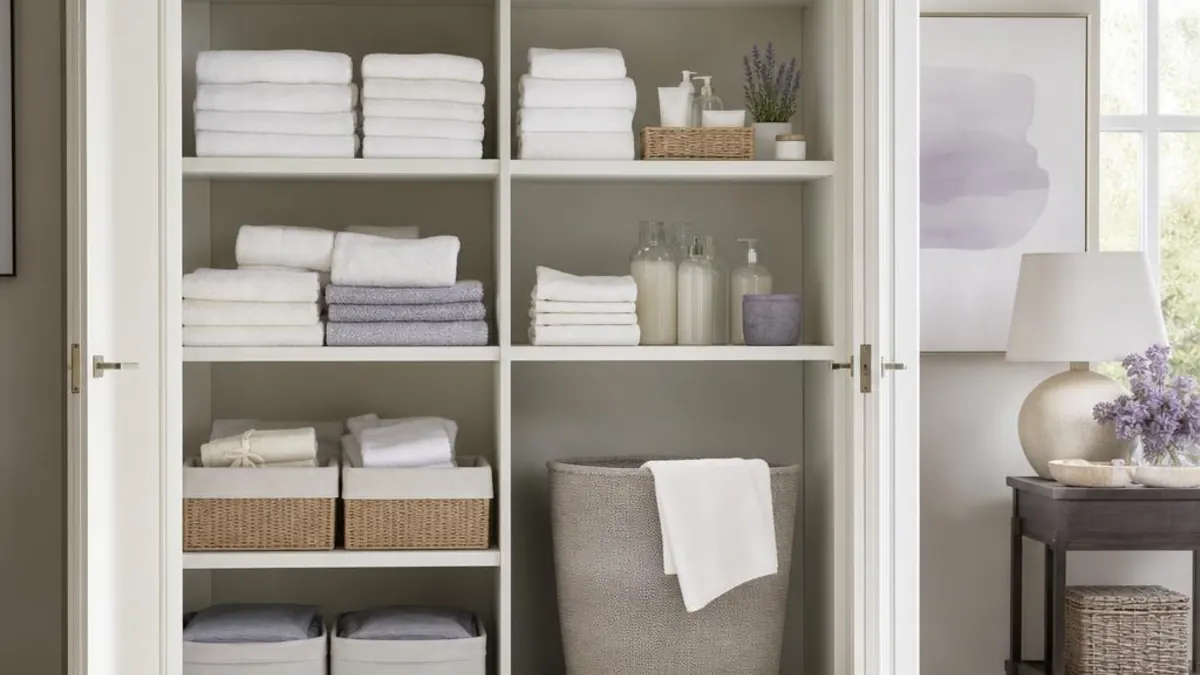
Cheap linen only looks like a saving until the first few washes: it pills, turns yellow and ends up in your reviews. The real saving comes from standardisation and organisation.
- Three sets for each bed. One on the bed, one in the wash and one in reserve. With fewer, your cleaning team works under pressure and a delay at the laundry holds up the next check-in. With more, you tie up money in stock.
- The same model everywhere. White linen and towels of the same sizes in every apartment. They are washed together, stains are easier to treat, stock is simple to top up and nothing needs sorting by colour or apartment.
- Mattress and pillow protectors. A waterproof cover costs far less than a stained mattress and is changed after every stay, together with the linen.
- A count at every clean. The team notes how many sets go to the wash and how many come back. Small losses only become visible if you count them.
Your own laundry or an outside one? Work out the full cost of one set: detergent, energy, water, drying and ironing, someone’s time and transport, plus wear on the washing machine. Compare the result with a professional laundry’s price per kilogram or per set. For one or two apartments, washing on site may be enough, provided drying does not delay the next check-in. From a few apartments upwards, a laundry with collection and delivery frees up your team’s time, and in our example the work of cleaning costs almost four times as much as the consumables.
Energy: pay for your guests’ comfort, not for an empty apartment
Since the electricity price cap expired on 1 July 2025, electricity has become one of the fixed costs that have risen most visibly. At the time, the Smart Energy Association (Asociația Energia Inteligentă) estimated final prices of 1.1–1.5 lei per kWh, including VAT. Utilities are included in your rate, so any waste comes out of your margin.
In a short-term rental apartment, waste happens mostly between stays: air conditioning left on by guests when they leave, radiators heating an empty apartment for three days, lights left burning. A few measures:
- A programmable or smart thermostat. You can control it from your phone: lower the temperature after check-out and bring it back to a comfortable level a few hours before the next guests arrive. ENERGY STAR describes exactly this way of working: the thermostat automatically switches to energy-saving temperatures when nobody is home.
- Air conditioning between stays. The cleaning team switches off the air conditioning at the end and cleans the filters at the intervals recommended by the manufacturer.
- LED bulbs and timer sockets. Especially for hallway or balcony lamps that guests forget to switch off.
- A clear and friendly house manual. Explain how the thermostat and air conditioning work and ask guests to switch them off when they leave. No fines and no reproachful tone: a guest who feels policed leaves a review to match.
- Your energy supplier. Compare offers in the comparison tool run by ANRE, the energy regulator, on the POSF platform. You can switch supplier through the same platform, and the switch takes place within 24 hours at most of signing the new contract or from the date you choose.
Do not save on the water heater temperature. Legionella bacteria grow in water systems at temperatures between 20 and 50 °C, and the World Health Organization recommends keeping hot water above 50 °C, which means at least 60 °C at the outlet of the water heater. If you switch the water heater off while the apartment stands empty for several days, switch it back on in good time so that the water reaches its working temperature again before guests arrive. After periods without guests, run the water at all taps and the shower: the WHO recommends flushing unused taps to reduce water stagnation.
Consumables: dispensers instead of miniatures
Shampoo, shower gel, soap, toilet paper, bin bags, washing-up liquid and welcome coffee and tea look like small expenses, but they come back with every stay. In our example, consumables amount to around 7 euros per stay and 64 euros a month.
The simplest saving is switching from miniatures to good-quality refillable dispensers, fixed to the wall or stable on the counter. You buy in large containers, top up at every clean and stop throwing away half-full bottles. The switch also has a deadline: Regulation (EU) 2025/40 on packaging, applicable from 12 August 2026, bans from 1 January 2030 the placing on the market of single-use packaging for cosmetic, hygiene and toiletry products in the accommodation sector, intended for a single booking and thrown away before the next guest arrives. The regulation gives shampoo and lotion bottles and soap wrappers as examples. The European Commission must publish guidelines explaining these restrictions in more detail by 12 February 2027.
- A minimum stock for each product. Decide how many units must always be in the apartment and in storage. The team tops up to that level and lets you know when stock runs low.
- Monthly shopping, not emergency shopping. What you buy in a hurry from the corner shop usually costs more than planned purchases.
- A modest but consistent welcome pack. Water, coffee and tea for the first day are enough. Consistency matters more than occasional generosity: a returning guest will look for what they found last time.
- Do not remove the basics. Toilet paper, soap, towels and bed linen are expected in any apartment, and their absence shows up immediately in reviews.
Preventive maintenance costs less than a breakdown in high season
A repair scheduled in November usually costs less than an emergency one in August with guests in the apartment. On Airbnb, the difference can be even greater. Its rebooking and refund policy lists among the issues that entitle guests to a refund the case where an amenity advertised in the listing is missing or does not work, for example a major appliance, heating or air conditioning. Guests must report the issue within 72 hours of discovering it, and if they get money back, the host receives no payout or a payout reduced by the amount refunded.
A simple preventive maintenance calendar looks like this:
| When | What you check |
|---|---|
| At every stay | The basic appliances (air conditioning, fridge, hob, washing machine), taps, drains and bulbs; the cleaning team reports any fault, with photos |
| Monthly | Descaling the kettle and the espresso machine, the bathroom sealant, the sink traps, the batteries in the smart lock and the remote controls |
| Before summer and winter | Servicing the air conditioning and the heating system, the filters, window seals |
| After periods without guests | Run the water at all taps and the shower and check that the water heater has reached its working temperature |
| Annually | A deep clean, turning the mattresses, checking the furniture and large appliances |
| Every 2 years and every 10 years | The periodic technical check of the gas installation (every 2 years) and the technical overhaul (every 10 years), carried out by an ANRE-authorised operator |
ANRE’s instructions also require an overhaul of the gas installation when it has not been used for more than 6 months; before putting it back into service, you notify the distribution operator. If your apartment stays closed for a whole winter, keep this rule in mind before the first guest.
What you never cut
Some savings show up straight away in reviews, and reviews influence how many bookings you get. On Airbnb, guests rate cleanliness, accuracy, check-in, communication, location and value separately, and for the Guest Favorites programme, Airbnb also takes into account high ratings in all six categories.
- Cleaning. It is the only category you fully control at every stay. Do not shorten the time allowed for a clean just to fit in another same-day check-in.
- Mattresses, pillows and linen. A bad night’s sleep is hard to forget, however beautiful the apartment.
- Internet. For guests who work remotely, the connection is essential. Check it after any work on the router.
- Safety. A checked gas installation, electrical appliances in good condition and working locks are not places to save money.
- Declared work. Paying a cleaner cash in hand looks like a saving, but since 18 December 2025 the fine for undeclared work has been 40,000 lei per person, up to a cap of 1,000,000 lei.
How to manage reviews and how to respond to negative ones is explained in our guide to reviews and reputation.
Cleaning and maintenance: clear contracts, not the lowest rate
Cleaning is the largest per-stay cost, so this is where negotiation matters most. What you can negotiate:
- Guaranteed volume in exchange for a better rate. A company that knows it has work all year round can plan its team and offer a better price per stay than for occasional jobs.
- What the rate includes. Linen and laundry, consumables, appliance checks, photos at the end and stock management.
- A shared checklist. The same tasks, in the same order, at every clean, with photos of the rooms at the end.
- Response times for emergencies. In the maintenance contract, agree how quickly someone comes out for a problem that prevents the stay: water, electricity, heating, air conditioning or the lock.
The labour market remains difficult in 2026, and the gross minimum wage rose to 4,325 lei on 1 July. How to secure your team for 2027 is covered in our guide to cleaning and maintenance staff.
Example: the savings plan in figures
Let us go back to the apartment taking 1,000 euros a month with net income of 266 euros. The assumptions below are illustrative, and your results depend on the apartment, the city and demand.
| Measure | Assumption | Monthly effect |
|---|---|---|
| Fewer stays for the same nights | 7 stays instead of 9, for the same 18 nights | +€68 |
| Scheduled energy use between stays | utilities 10% lower, from 127 to around €114 | +€13 |
| Dispensers and planned shopping | consumables 10% cheaper, from around €50 a month after the reduction in stays | +€5 |
| Preventive maintenance | additional budget | −€10 |
| Total | +€76 |
Net income would rise from 266 to around 342 euros a month, or 34.2% of takings, above the level before the price rises. But note where the difference comes from: 68 euros come from fewer guest changeovers and only 8 euros from the other measures, after the additional maintenance budget. Small savings matter, but your margin is decided by your length-of-stay rules and your prices. And if a longer minimum stay costs you more than a night and a half a month, the gain disappears.
Assumptions of the example. The same takings (1,000 euros), the same 18 occupied nights and the same 15% commission as in our margin analysis; income tax and CASS stay the same, because takings do not change. Cleaning costs around 26.7 euros per stay and consumables around 7.1 euros. The 10% reductions in utilities and consumables are assumptions, not measured results.
Common mistakes
- Buying cheaper linen and towels. You save once, then pay through weaker reviews and more frequent replacements.
- Shortening cleaning time to fit in more check-ins. Guests rate cleanliness separately, and it is the only category you fully control.
- Accepting any one-night stay at the usual rate. In our example, a one-night stay pushes costs up to 44 euros per occupied night; use a short-stay cleaning fee or a higher minimum rate.
- Lowering the water heater temperature to save money. Hot water kept below 50 °C encourages the growth of Legionella bacteria.
- Putting off the air conditioning service until it breaks down. A fault during a stay can lead to a refund, and your payout drops by the amount refunded.
- Charging guests penalties for check-out tasks. Airbnb asks hosts not to impose fees or penalties for cleaning tasks left undone.
- Paying for cleaning cash in hand. The fine for undeclared work is 40,000 lei per person.
Frequently asked questions
Is it worth requiring a two-night minimum all year round?
Not necessarily. At weekends in high season and in periods of strong demand, a two-night minimum reduces the number of cleans without costing you bookings. In the low season, flexibility often brings bookings you would not otherwise get. Use the short-stay cleaning fee and the last-minute settings to fill gaps, then compare: in our example, if a stricter rule costs you more than a night and a half a month, you lose money.
How high should the cleaning fee be?
Start from the real cost of a stay: cleaning, washing the linen and consumables, around 34 euros in our example. You can cover the whole cost or only part of it, with the rest included in the nightly rate. On Airbnb, the cleaning fee is part of the total price shown to guests, so a high fee makes a short stay look expensive. The reduced fee for one- or two-night bookings helps you find the balance.
Can I switch off the water heater when the apartment is empty?
Yes, for longer periods, but switch it back on in good time so that the water reaches its working temperature again before guests arrive, and run the water at the taps and the shower. Do not permanently lower the set temperature, though: the World Health Organization recommends keeping hot water above 50 °C, meaning at least 60 °C at the outlet of the water heater, to limit the growth of Legionella bacteria.
What do I do with the shampoo and shower gel miniatures I already have?
You can keep using them. The restriction in Regulation (EU) 2025/40 applies from 1 January 2030 and concerns single-use packaging intended for a single booking. The European Commission must publish guidelines with concrete examples by 12 February 2027. Until then, gradually switching to refillable dispensers lowers your per-stay costs and prepares you for the new rules.
Sources
- Airbnb Help Center – Add cleaning fees to home listings
- Airbnb Help Center – Add additional fees to home listings
- Airbnb Help Center – Rebooking and refund policy for homes (effective 6 February 2025)
- Airbnb – The right price for every season (20 May 2026, updated 2 September 2026)
- Airbnb – Why reviews matter
- World Health Organization – Legionellosis, fact sheet
- ANRE – POSF, the online platform for switching electricity and natural gas supplier (in Romanian)
- ANRE – Instructions for the use of natural gas (in Romanian)
- ENERGY STAR – Smart Thermostats
- EUR-Lex – Regulation (EU) 2025/40 of the European Parliament and of the Council of 19 December 2024 on packaging and packaging waste
- Știrile ProTV – How much electricity will cost from 1 July, after the price cap ends (in Romanian)
- Stratulat Albulescu – Recent amendments to fines for undeclared work (19 December 2025)
- Curs de Guvernare – The minimum wage rises to 4,325 lei gross; BNS asks for 5,000 lei from 1 January 2027 (1 July 2026, in Romanian)