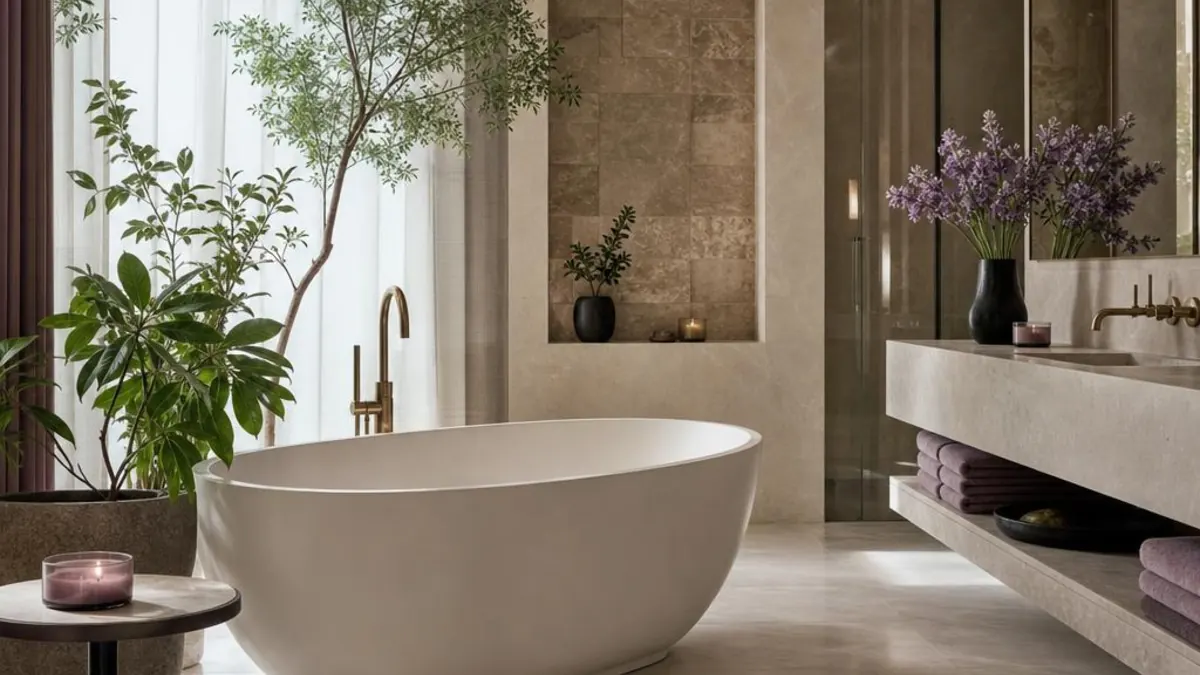
Rest has become the main reason to travel. In the global research behind Hilton’s 2026 Trends Report, “to rest and recharge” is the number one motivation for leisure travel, chosen by 56% of respondents. Wellness tourism was already worth $894 billion in 2024, more than twice as much as in 2012, and Romania is among the ten countries where the wellness economy grew fastest over the past five years, according to the Global Wellness Institute (GWI). For a short-term rental (regim hotelier) host, the trend does not mean turning the apartment into a spa. It means good sleep, quiet, room to move and easy access to treatments through licensed partners. Below you will find what the data show, what is happening in Romania’s spa resorts, which amenities are worth it for each type of property and how to calculate whether an investment pays off.
What wellness means for accommodation in 2026
GWI defines wellness tourism as travel associated with the pursuit of maintaining or enhancing one’s personal wellbeing. The market is large and growing steadily. The global wellness economy reached $6.8 trillion in 2024, up 7.9% on the previous year, and the institute projects average growth of 7.6% a year to around $9.8 trillion in 2029. Wellness tourism was one of the fastest-growing sectors before the pandemic, and its share of all tourism trips rose from 5.8% in 2012 to 7.8% in 2022. For 2027, GWI projects 8.3%.
What people look for is changing too. The Global Wellness Summit’s 2026 trends report describes a backlash against “over-optimisation”: after years of sleep scores and step counts, people are once again looking for pleasure, calm and experiences that matter more than numbers. The same report says longevity is moving out of clinics and resorts and into the home, and that regulating the nervous system is becoming wellness’s next frontier. For a host, the practical conclusion is simple: guests do not necessarily want sophisticated technology, but a place where they sleep well and can unwind.
Traveller surveys say the same. Hilton’s report draws on an Ipsos survey of more than 14,000 travellers in 14 countries. Besides rest (56%), common motivations include time in nature (37%), improving mental health (36%) and “me time” (20%). A Global Hotel Alliance survey found that 42% of respondents now prefer “unplanned, relaxing” trips that put comfort, wellbeing and time first. And Booking.com, which surveyed 29,733 travellers in 33 countries, reports that nearly 80% would be open to booking a trip dedicated to skin treatments and that 75% are interested in rooms designed for better sleep.
Why it matters for revenue: wellness guests spend more
GWI compiled ten years of wellness tourism data and compared what these travellers spend with the average. In 2022, an international wellness tourist spent on average $1,764 per trip, 41% more than a typical international tourist. In domestic tourism the gap was even wider: $668 per trip, 175% above the average domestic tourist. The trend is relevant for Romania, where domestic tourism dominates: between 2012 and 2022, the spending premium of international wellness tourists fell from 65% to 41%, while that of domestic wellness tourists rose from 150% to 175%.
Read these figures with care. They describe total spending per trip, not the nightly rate, and they are global averages. We found no credible public statistic showing how much the rate of an apartment in Romania rises when you add a given amenity. So instead of promising a percentage, below we propose a calculation method you can apply to your own numbers.
| Indicator | Value | Source |
|---|---|---|
| Global wellness tourism | $894 billion (2024), up from $439 billion (2012) | GWI |
| Global wellness economy | $6.8 trillion (2024, +7.9%); around $9.8 trillion projected for 2029 | GWI |
| Growth of Romania’s wellness economy | 9–10% a year (2019–2024), among the top ten countries | GWI, 2026 country rankings |
| Wellness trips as a share of all trips | 7.8% (2022); 8.3% projected for 2027 | GWI |
| Spending per trip versus a typical tourist | +41% (international, $1,764); +175% (domestic, $668) | GWI, 2022 data |
| Main motivation for 2026 holidays | to rest and recharge (56%) | Hilton, global research |
| Interest in rooms designed for sleep | 75% | Booking.com, 29,733 respondents |
Romania: spa resources, investment and the gaps that remain
“Romania has a resource that few European countries can match: mineral waters, muds, therapeutic gases and dozens of spa and climatic resorts. But the natural resource alone is not enough,” interim economy minister Irineu Darău said on 8 October 2026, as quoted by Mediafax. The minister announced that all 9 projects financed under a de minimis aid scheme for spa and climatic resorts had been fully paid out. The projects are located in five counties, in Băile Felix, Băile 1 Mai, Călimănești, Călacea, Tășnad and Pucioasa. The beneficiaries invested more than 12 million lei and the ministry reimbursed 6.04 million lei, with support covering at most 50% of eligible costs excluding VAT. The money went into medical equipment for treatment centres, balneotherapy equipment, upgraded accommodation and thermal-water pools. The next steps announced are changes to the scheme and a fully digital application procedure.
Locally, the sums are much larger. In Călimănești, almost €100 million of public and private investment has turned the town into one of the most dynamic spa resorts in the country, with around a quarter of a million visitors a year, according to a Știrile ProTV report from September 2026. Geothermal water, drawn from three kilometres underground at almost 90 degrees, first heats the hotels and then feeds the pools and spa centres. Two water parks and more than 25 pools have made the resort a year-round destination, and many visitors come only to relax, not for treatment. The report also shows the limits: balneology doctors are increasingly hard to find, some of those still practising are over 70, and traffic in the Olt Valley gridlocks the resort on busy days.
Demand is concentrated in a few destinations. According to tour operator BIBI Touring, quoted by Forbes Romania, Băile Felix, Călimănești-Căciulata, Băile Herculane and Băile Tușnad accounted for about 55% of spa-resort bookings in the first quarter of 2026. The same operator notes that accommodation preferences are split between modern, higher-rated hotels with spa facilities and smaller, budget-oriented properties. Our reading: a “middle-of-the-road” offer without a clear selling point risks losing out to both types of competitor.
There is also a large segment that is not aimed at short-term rental hosts: subsidised treatment tickets. For 2026, the Government approved 114,000 of them, distributed through the pension offices for 16-day stays, 12 of them with treatment, in two- and three-star hotels. For the first series, the full price of a ticket is between 3,480 and 3,688 lei, according to Adevărul. This flow goes to contracted establishments. The realistic guest for an apartment or villa in a spa resort is the self-paying traveller who combines your accommodation with nearby treatments, pools or spa centres.
What it means for you, by location (our recommendations). In a spa resort, you complement the treatment centres: state in your listing how far away they are, their opening hours and how to book, and offer a weekly rate for long stays. In the mountains, nature and warmth matter most: a sauna or a quiet terrace can become your main selling point. In the city, focus on sleep and quiet, a kitchen where guests can cook healthily, and recommendations for nearby parks, running routes and spa centres.
Which amenities are worth it, by property type
The recommendations below are ours and build on the data above: rest, quiet and nature matter more than technology. We have grouped them into four categories, from improvements that suit any home to investments that only make sense in certain properties.
| Category | What it includes | Property types | Why |
|---|---|---|---|
| Sleep and quiet | quality mattress, two types of pillow, cotton or linen bedding, blackout curtains, door and window seals, warm dimmable lighting | all | speaks directly to the main motivation, rest, and shows up in reviews |
| Movement and food | yoga mat, resistance bands, running routes in the local guide, well-equipped kitchen, tea and fruit on arrival | city apartments, stays of more than three nights | 48% of travellers cook their own meals while away (Hilton) |
| Heat and water | sauna, outdoor hot tub, rain shower | villas and houses in the mountains or in resorts | an experience that shows in photos, but with high running costs and maintenance obligations |
| Partnerships | massage by qualified therapists, entry to spa centres or pools, information and transfers to the treatment centre | spa resorts and cities with spa offerings | adds value without a large investment of your own |
The first category matters most, because a guest who slept badly usually says so in their review. You do not need a big budget, just a clear checklist that you go through before every stay.
A bedroom checklist for good sleep
- Darkness: blackout curtains or blinds, no standby lights near the bed.
- Quiet: door and window seals, no noisy appliances next to the bedroom. If the street is busy, say so in the listing.
- Temperature: an easy-to-use thermostat or air conditioning, with short instructions.
- Bed: a mattress in good condition, two types of pillow and a spare blanket.
- Bedding: natural fibres, changed for every stay.
- Light: warm, dimmable bulbs for the evening.
- Air: good ventilation, no strong air fresheners.
Saunas and hot tubs: what to check first
These are the amenities that look best in photos, and also the ones with the most obligations. Before investing, check four things. The first is running costs: energy, water, water-treatment products and the extra cleaning time after each stay. The second is maintenance: a hot tub with badly treated water or a sauna that does not heat up in time produces the harshest reviews. The third is safety: clear rules of use, visible instructions, and care around children and use after drinking alcohol. The fourth is the wider framework: your insurance policy, the rules of the owners’ association or residential complex, and your neighbours’ peace and quiet. In an apartment block, such amenities are usually not an option; in a villa or mountain house, they can become the main selling point of the listing.
Do not promise medical benefits. Words such as “treatment”, “therapy” or “healing” describe medical services. Even the geothermal water in Călimănești is used in procedures recommended by doctors. If you give guests access to such services, do so through licensed providers and state exactly who provides the service, where and at what price. In your listing, stick to verifiable facts: “new mattress, 2026”, “blackout curtains in the bedroom”, “private sauna, by appointment”.
Do the maths before you invest
Because there is no credible public data on how much each amenity adds to the rate, work backwards: calculate how much the nightly price would need to rise for the investment to pay for itself. The minimum increase per night equals the annual cost of the amenity divided by the number of nights sold in a year. The annual cost includes depreciation, that is, the investment divided by the number of years you will use it, plus running costs.
In the table below, the figures are hypothetical and serve only as an example; replace them with your own quotes and booking history. For the apartment we used 18 nights sold per month, as in the margin model from our analysis of costs and rates.
| Scenario (hypothetical) | Investment | Annual cost | Nights sold per year | Minimum increase per night |
|---|---|---|---|---|
| Sleep and quiet package, apartment | €2,000 | €667 (3-year depreciation) | 216 | ≈€3.10 |
| Movement corner and kitchen upgrade, apartment | €600 | €200 (3-year depreciation) | 216 | ≈€0.90 |
| Sauna, mountain house | €8,000 | €2,800 (€1,600 depreciation over 5 years plus €1,200 running costs) | 150 | ≈€18.70 |
Two adjustments matter. If you sell through platforms, the result is a net amount, so divide it by (1 − commission). At a 15.5% commission, the level of Airbnb’s new host-only fee, €3.10 net means about €3.70 in the displayed price. If you are not registered for VAT, Airbnb also adds 21% VAT to its fee, which brings the cost to around 18.8% of the rate, so the same €3.10 net means about €3.80. For hosts in the European Economic Area and Switzerland, the deadline to adjust prices to the new fee is 13 October 2026. Second, an amenity can also pay for itself in ways other than the rate: more nights sold in the off-season, longer stays or better reviews. All of these, however, need to be measured, not assumed.
To find out whether the market will accept a higher rate, compare yourself with similar listings in your area. In KeyBid Puls you can see prices, events and the impact of the weather for hexagonal zones with a 750-metre radius, and in 2026 Airbnb introduced hyperlocal pricing and availability insights, explained in our guide to the Airbnb Summer Release. Test the new price for a few weeks, watch occupancy and reread your reviews: if guests start mentioning sleep and quiet, the investment is doing its job.
How to sell the experience: listing, photos and packages
An amenity that does not show in the listing does not exist for the guest. Put the rest-related features in the first photos and the first lines of the description, with concrete details: the type of mattress, the blackout curtains, the distance to the park or the treatment centre. Our guide to photos and descriptions explains how to build photos and copy that convert. Accuracy matters more than ever: in 2026 Airbnb introduced AI-generated review highlights, so an exaggerated promise quickly reaches future guests.
Wellness also works well in the off-season. A three-to-five-night midweek stay with late check-out, tea and fruit on arrival and a recommendation for a nearby massage or spa can fill days that would otherwise be hard to sell. In spa resorts, where treatments are usually given in series over several days, long stays come almost naturally. You will find package ideas in our guide to off-season offers and long stays, and advice on building a clear selling point in an increasingly crowded market in our guide to differentiation.
Common mistakes
- Investing in eye-catching amenities before the basics. A sauna does not make up for an uncomfortable mattress or a noisy bedroom.
- Using medical terms without backing. “Detox”, “therapy” or “treatment” create expectations a rental cannot meet and expose you to complaints.
- Advertising amenities you do not maintain. A dirty hot tub or a sauna that does not work produces worse reviews than not having one at all.
- Raising the price without comparing. Without looking at similar listings in your area and tracking occupancy, you will not know whether the new rate is helping or costing you.
- Ignoring running costs. Energy, water, water-treatment products, extra linen and longer cleaning times can wipe out the gain from the higher rate.
Frequently asked questions
What does wellness tourism mean for a short-term rental?
GWI defines wellness tourism as travel associated with maintaining or enhancing personal wellbeing. For a host, this means above all excellent conditions for rest: darkness, quiet and a comfortable bed. Then come space to exercise, a kitchen where guests can cook healthily and access, through partners, to spa facilities or treatments.
Can I charge a higher rate if I add wellness amenities?
You can, if the market accepts it, but there is no guaranteed figure. First calculate the minimum increase per night you need for the investment to pay off, compare yourself with similar listings in your area and test the new price for a few weeks while tracking occupancy and reviews.
Is a sauna or hot tub worth it?
Usually in a villa, a mountain house or a resort, where guests look for this kind of experience. Factor in running and maintenance costs: in our hypothetical example, an €8,000 sauna in a house that sells 150 nights a year needs an increase of about €18.70 per night to pay for itself over five years.
Can I offer massages or treatments in the apartment?
Only through qualified, licensed providers, and guests must know clearly who provides the service and at what price. Balneotherapy treatments take place in treatment centres, on a doctor’s recommendation. As a host you can make access easier, with information, bookings or transfers, but do not present them as your own service.
Sources
- Global Wellness Institute – Wellness Economy Statistics & Facts
- Global Wellness Institute – What is Wellness Tourism?
- Global Wellness Institute – A Decade of Wellness Tourism: First-Ever Compilation of 10 Years of Market Data (25 March 2024)
- Global Wellness Institute – 2026 The Global Wellness Economy: Country Rankings
- Global Wellness Summit – Global Wellness Summit Releases 10 Wellness Trends for 2026 (27 January 2026)
- Hilton – Hushpitality: Seeking Sweet Silence, 2026 Trends Report
- Hilton – The Rise of the Whycation: Hilton’s 2026 Trends Report
- Booking.com – The Era of YOU: Booking.com predicts the top trends defining travel in 2026
- Skift – New Research: Global Hotel Alliance Unveils 2026 Travel Trends (8 December 2025)
- Mediafax – Irineu Darău announces the payment of over 6 million lei for investments in spa resorts (8 October 2026, in Romanian)
- Fonduri Structurale – Over 6 million lei has reached investors in Romania’s spa and climatic resorts (10 October 2026, in Romanian)
- Știrile ProTV – Călimănești, the €100 million resort: water parks, geothermal water and treatment centres, but no doctors (4 September 2026, in Romanian)
- Forbes Romania – The tourism industry slows down at the start of 2026 (8 May 2026, in Romanian)
- Adevărul – Pensioners receive the first treatment tickets of 2026 (in Romanian)
- Airbnb – Simplifying service fees on Airbnb (7 July 2026, updated 24 August 2026)
- Airbnb Help Center – Value Added Tax (VAT) and how it applies to you