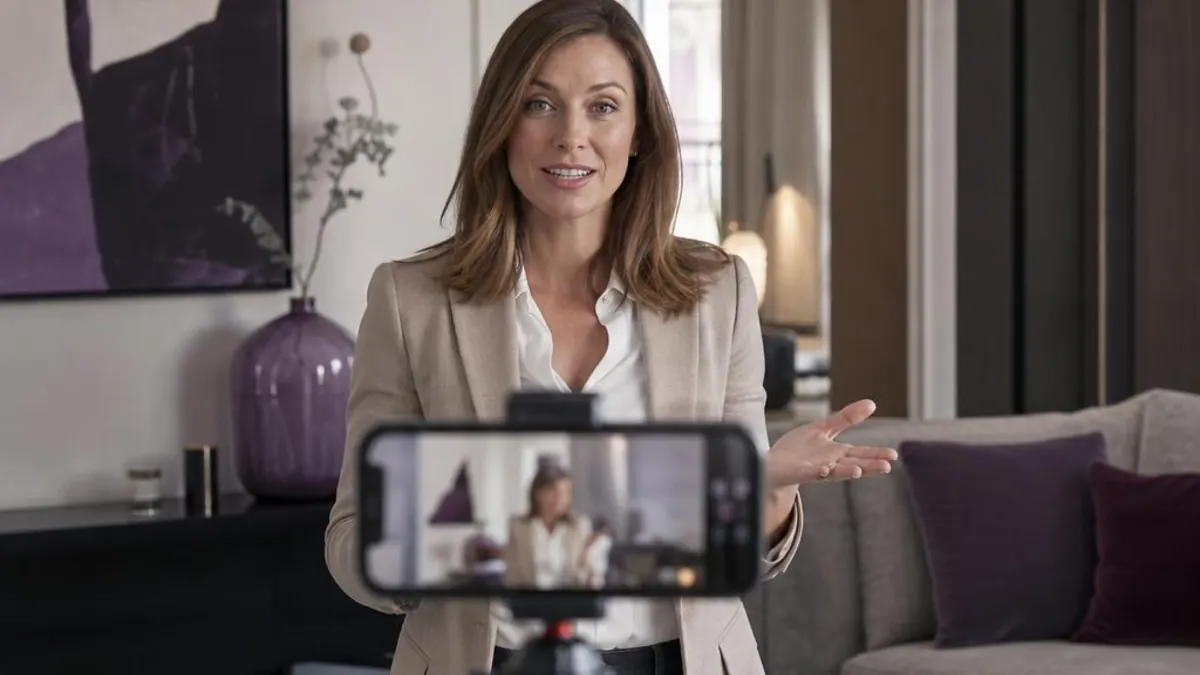
On Airbnb, guests do not just choose a home; they also choose a host. Your profile follows guests from the listing page to messages and reservation details, and your photo may even be highlighted in search results. For property managers, the stakes are twice as high: the same profile has to win over guests and also owners who are entrusting their home to someone they have never met. Unlike a lower price, a credible personal brand is an advantage a competitor cannot copy overnight. This guide shows you what guests and owners see about you, how to complete your profile on Airbnb and Booking.com, how to build your reputation as a manager and what content you can publish without breaking platform rules or the law.
What guests and owners see about you
On Airbnb, guests reach your profile from the listing page, messages, emails and reservation details. Some information appears automatically: your name (your legal first name or, if you have added one, your preferred first name or business name), how many years you have been hosting, your average rating, the month and year your identity was verified, guest reviews and, where applicable, Superhost status. The profile is public, and a host’s photo may be highlighted in search, on listings and in emails to guests. Airbnb requires hosts to have a profile photo, although it is optional for guests.
The rest is up to you: an introduction, the languages you speak, where you live, your interests and a few fun facts about yourself, such as where you would most like to travel. All of these are optional, but each one tells guests something. Airbnb points out that profile information sets expectations: if you mention what you serve for breakfast, guests may expect you to provide it.
On Booking.com, the host profile is a short text that personalises your listing: a welcome message, what makes the property special and what you love about the area. Booking.com says these personal touches can help build trust and bookings, and the profile is translated into all the languages the platform supports. You fill it in from the Extranet or the Pulse app, with a photo of yourself or the property and a name, and you can add versions you have written yourself in other languages. Do not include personally identifiable information such as phone numbers, dates of birth or email addresses: Booking.com does not display it, and a section that contains it may not appear on your property page at all.
If you operate as a professional host, for example through a company, there is an extra layer of transparency. The EU Digital Services Act requires Booking.com to collect, verify and display certain essential information about partners designated as professional hosts, and without the Know Your Partner form their properties cannot be seen or booked from within the European Economic Area. Your company details will reach guests either way, so it makes sense for the company name to be the same one you use everywhere.
For managers, your platform profile is also a calling card for owners. On KeyBid, for example, a link to your Airbnb or Booking.com profile is mandatory for managers, and owners receive it after unlocking, together with your contact details.
A profile that inspires trust: what to fill in
A good profile does not need long texts. It needs a few clear elements, filled in consistently across all platforms:
| Element | Airbnb | Booking.com | What to do |
|---|---|---|---|
| Photo | Mandatory for hosts; may appear in search and in emails | A photo of yourself or the property | A recent portrait with your face clearly visible, in natural light, against a simple background |
| Name | Preferred first name, or business name if you host as a business | The name shown on your profile | The same name on the platforms, your website and social media |
| Introduction | Intro, languages spoken, where you live, interests | A few lines about the property, the neighbourhood and yourself | Three or four sentences: who you are, why you host and what guests get |
| Languages | Your answer to the question on languages spoken | Profile in several languages | Only languages you can hold a conversation in |
| Automatic signals | Years hosting, rating, identity verification, reviews, Superhost | The property’s review score | You cannot edit them; you improve them through good stays and quick responses |
For the photo, Airbnb gives co-hosts a few rules that work for any host: a simple background and natural light, no selfies, flash, backlighting, logos or illustrations, no pets or other people in the frame, and your face must be clearly visible. For the introduction, the same guide recommends a short description of your hosting experience that explains what makes you special; its example starts with renting out a spare room and ends with helping other hosts today.
Sample introduction for a host in Brașov. “I’m Ana and I’ve been hosting since 2021 in the flat where I grew up, close to Piața Sfatului. I speak Romanian, English and German. When you arrive, I’ll leave you a map of my favourite routes, and I usually reply to messages within the hour.” The example is illustrative: only write what you can deliver on every stay.
Superhost status is earned, not filled in. Airbnb assesses it every three months, based on the previous 12 months: at least 10 stays or 3 stays totalling at least 100 nights, an overall rating of at least 4.8, a response within 24 hours to at least 90% of new messages and a cancellation rate below 1%, with the exceptions the platform allows. Airbnb may suspend or withhold the status from hosts with a high rate of removed reviews or host-initiated cancellations.
For managers: the reputation that does not show up on your profile by itself
This is a trap many managers discover late. When you manage an owner’s home as a co-host on Airbnb, guest reviews appear on the listing page and on the owner’s profile, not on yours. And only the listings you own count towards Superhost status: listings you co-host are not taken into account. You can manage ten homes with excellent reviews and, at the same time, have a personal profile that is almost empty.
Airbnb solved the problem with its Co-Host Network, where the co-host profile shows the number of listings, years of experience, overall rating and reviews of the homes they manage. However, the network only operates in 13 countries: Australia, Brazil, Canada, France, Germany, Italy, Japan, Mexico, Puerto Rico, South Korea, Spain, the United Kingdom and the United States. In Romania, you have to build your track record another way:
- Become the primary host where it makes sense. On Airbnb, the primary host is the person shown as the host on the listing, typically the one the guest interacts with most. It can be the owner or a co-host with full access, and they are also the ones who make the choice. Reviews stay with the owner, but guests see your name and photo, including when they write their review.
- Build a portfolio with owners’ consent. A list of the homes you manage, with listing links, ratings and number of reviews, shows results anyone can check on the platform. Ask each owner for consent before including their home.
- Prepare a sample monthly report. Owners want to know how they will find out about results. An anonymised report with the month’s booked nights, income, costs and reviews says more than any slogan.
- Ask for references; do not write testimonials. An owner who agrees to take a call from a prospective client is worth more than a quote on your website. If you publish testimonials, use only real statements, with the author’s consent.
- Keep your own profile active. If you also have homes of your own, they build your personal rating and, over time, can earn you Superhost status.
To win new clients, Airbnb’s advice for co-hosts also works in Romania, even without the network. Tell friends, family, neighbours and colleagues that you manage homes, ask the cleaning, gardening and maintenance crews you work with whether they also work with hosts who are looking for help, and go to local or online events where you introduce yourself to homeowners, small businesses and people working in tourism. Be ready to explain your services in a few sentences. A co-host in Palm Springs quoted by Airbnb says he found his clients mainly through recommendations in his area, and two homes came through the person who cleaned his pool. You can also stand out with concrete extras: a checklist for new hosts, introductions to suppliers, a welcome kit for guests or a local guidebook you update regularly.
On KeyBid, your manager card shows your city, the number of properties you work with, your years of experience and your collaboration type: “Fixed Amount”, “Commission” or “Fixed Amount or Commission”. If you are just starting out, the card shows the “NEW” label instead of years of experience. The card details are self-declared and owners confirm them in your first conversation, so only enter figures you can back up. The steps, from profile to first call, are in our guide to the KeyBid app, and how to grow from one home to several is covered in our guide to scaling your portfolio.
Contact details are not a marketing list. An owner’s or a guest’s phone number and email are to be used for the purpose you received them for. Law No. 506/2004 requires prior consent for commercial communications by email, and the General Data Protection Regulation does not allow data to be processed for a purpose incompatible with the one it was collected for.
Reputation: genuine reviews and public responses
Reviews are the part of your brand you do not control directly. In a survey cited by the European Commission, 71% of consumers say reviews are important when choosing holiday accommodation. On Airbnb, your public response appears immediately below the review; on Booking.com, it is checked by the platform first. A calm response that thanks the guest, explains briefly and says what you have changed shows the next guest how you behave when something goes wrong. The steps, with examples, are in our guide to reviews.
Just as important is what you are not allowed to do. Since 28 May 2022, Law No. 363/2007, as amended by Government Emergency Ordinance (OUG) No. 58/2022, has prohibited submitting or commissioning fake reviews and endorsements, and misleading commercial practices are fined 20,000–100,000 lei. Airbnb, for its part, prohibits reviews given or withdrawn in exchange for an incentive, such as a discount or a refund. A made-up testimonial on your website or social media is not a shortcut; it is a risk.
Content beyond the platforms: where to publish and what to show
Booking platforms are not the only place where guests and owners can discover you. According to DataReportal, Romania had about 12.9 million social media user identities in October 2025, or 68.3% of the population. The figures below come from the platforms’ advertising tools and show how many people an ad can reach, not the number of monthly active users, but they help you choose your main channel.
| Platform | Advertising reach in Romania, October 2025 | What you can publish |
|---|---|---|
| YouTube | 12.9 million users | Video tours of the home, neighbourhood guides, answers to frequently asked questions |
| 10.3 million users | Updates about the home, events in town, recommendations for the local community | |
| TikTok | 8.71 million adult users | Short behind-the-scenes clips: preparing between stays, the details you care about |
| 6 million users | Photos and clips of the home, the area and each season | |
| 5.3 million members | For managers: case studies, reports and lessons for owners and investors |
Content that works for a host does not look like a hotel advert. Show what the listing cannot: how you prepare the home between two guests, what cleaning standard you follow, where you eat in the neighbourhood or which route you recommend on a rainy day. A clip filmed on a phone on a tripod is enough, as long as the picture is steady and the sound is clear. The honesty rules of your listing apply here too: show the home as guests will find it. The steps for photos and descriptions are in our guide to listing photos and descriptions, and how to choose the audience you speak to is covered in our guide to differentiation.
The limits are clear. Airbnb’s off-platform policy prohibits links that take guests off Airbnb, in listings or messages, discounts for booking off the platform, asking for an email address or other contact channels through messages after a booking, and using guest details for marketing or contact lists. In the event of repeated or severe violations, Airbnb may suspend or permanently deactivate listings or the account. The Content Policy, which also applies to profile pages, does not allow logos, links or company names added solely to advertise a separate business either. Your own channels therefore have to attract people on their own merits, through search, recommendations and content, not through platform messages. How to build a website for direct bookings and how to use the details of guests who book directly, with their consent, in targeted marketing campaigns are explained in separate guides.
Google also has a limit that many people overlook: a holiday home cannot have a Google Business Profile. Google’s guidelines explicitly exclude rental or for-sale properties, such as holiday homes and vacant flats, but accept sales or leasing offices that serve customers in person during their stated hours. For a manager with an office where owners are received, a Business Profile can be a useful calling card; for the flat itself, it is not an option.
Collaborating with content creators: advertising, not a favour
Offering a content creator a stay in exchange for posts looks like cheap promotion. For the European Commission, it is advertising through barter: its legal guidance for influencers gives hotel rooms offered in exchange for promotion as an example, and EU consumer law requires such advertising to be disclosed, whether payment is made in money, products or services. In Romania, Law No. 363/2007 considers disguised advertising unfair in all circumstances, meaning the use of editorial content to promote a product the trader has paid for, without making this clear.
The problem is not theoretical. In a sweep coordinated by the Commission and carried out by consumer protection authorities from 22 Member States, Norway and Iceland, with results published on 14 February 2024, 97% of the 576 influencers checked had posted commercial content, but only 20% systematically disclosed it as advertising. Before offering such a stay, agree in writing on:
- what the creator will publish, on which channels and by what date;
- how the post will be labelled: with the platform’s paid partnership label or the word “advertising”, visible without an extra click;
- who may use the photos and clips after the stay, and on what terms;
- where their audience comes from, because followers in other countries only help you if they come from the markets you are interested in; for foreign tourists, see our analysis of source markets;
- how you will measure the result, for example with a UTM-tagged link to your website.
A 30-day plan
A personal brand is not built in a month, but its foundations are. Here is an order that works for both hosts and managers:
| Week | What you do | Result |
|---|---|---|
| 1 | A new photo, introduction and languages; the same name on all channels; your Booking.com host profile in Romanian and English | A complete, consistent profile on every platform |
| 2 | Respond to recent reviews you have not answered yet, prepare template messages for frequent questions and track your response time | Public responses that show how you work, and a step towards the 90% threshold required for Superhost |
| 3 | Choose a main channel and plan four pieces: a home tour, a neighbourhood guide, a behind-the-scenes clip and the answer to a frequent question | A publishing rhythm you can sustain |
| 4 | Managers prepare their portfolio, with owners’ consent, a sample monthly report and an updated KeyBid card; hosts update their guidebook for guests | Evidence an owner or a guest can check |
Common mistakes
- A profile photo with a logo, sunglasses or a group. Airbnb recommends a portrait with your face clearly visible, without logos or other people in the frame.
- Promises on your profile that you do not keep on every stay. Your profile sets expectations, and any gap ends up in reviews.
- A different name on every channel. Guests and owners need to recognise the same person or company on Airbnb, Booking.com, your website and social media.
- Links to your website or Instagram in your listing or in Airbnb messages. They are prohibited by the platform’s policy, and repeated or severe violations can lead to the suspension of listings or the account.
- Made-up testimonials, or reviews requested in exchange for a discount. Law No. 363/2007 and platform policies prohibit them.
- Undisclosed collaborations with content creators. A stay offered in exchange for posts is advertising and must be labelled as such.
- Inflated figures on your manager card. Owners confirm them on the first call, and a discrepancy can cost you the collaboration before it starts.
- Guest or owner details used for newsletters without consent. You need their consent or, for direct customers, the strict conditions of Law No. 506/2004, and Airbnb guest details cannot be used for marketing.
Frequently asked questions
Can I use my business name on my Airbnb profile?
Yes. If you host as a business, Airbnb lets you enter your business name in the preferred first name field, and it appears on your profile, in reviews and in messages. A profile photo is still mandatory for hosts, and a portrait of the person guests talk to makes a business name feel more personal. On Booking.com, the host profile can have a photo of yourself or the property and a name of your choice.
As a manager, how do I show the reviews of the homes I manage?
On Airbnb, reviews stay on the listing page and on the owner’s profile, not on the co-host’s profile. With owners’ consent, you can make a list of links to the listings you manage, where anyone can read the reviews. You can ask to be made the primary host so that guests see you on the listing, and you can give a prospective client the details of an owner who has agreed to act as a reference.
Can I ask Airbnb guests to follow me on Instagram or book direct next time?
Not through Airbnb. The platform’s policy prohibits encouraging bookings off Airbnb, including future stays, external links in listings and messages, and asking for other contact channels through messages after a booking. Build your audience separately, through search, recommendations and content. Guests who book directly on your website can receive email offers for similar services only under the conditions of Law No. 506/2004, with a simple way to opt out offered when you collect their details and in every message.
Is it worth offering a stay to a content creator?
It can be, if their audience resembles the guests you want. But treat the arrangement as an advertising campaign: the European Commission considers a stay offered in exchange for promotion to be advertising through barter, and posts must be clearly labelled. Agree in writing on what will be published, how it will be labelled and who may use the images, then measure the result with a UTM-tagged link; how to build one is explained in our guide to targeted campaigns.
Sources
- Airbnb Help Center – What info is shown on your profile
- Airbnb Help Center – Overview of your profile
- Airbnb Help Center – Add optional info to your profile
- Airbnb Help Center – Change your name in your profile
- Airbnb Help Center – What’s required to be a Superhost
- Airbnb Help Center – Ratings and reviews for co-hosts
- Airbnb Help Center – Primary Hosts: An introduction
- Airbnb – Join the Co-Host Network (16 October 2024, updated 5 June 2025)
- Airbnb – Create a compelling co-host profile (16 October 2024, updated 5 June 2025)
- Airbnb – Build a strong local presence (16 October 2024, updated 5 June 2025)
- Booking.com for Partners – Guide on updating your property page
- Booking.com for Partners – Property page
- Booking.com for Partners – Manage your regulatory tasks in the compliance center
- Airbnb Help Center – Off-Platform and Fee Transparency Policy
- Airbnb Help Center – Airbnb’s Content Policy
- Airbnb Help Center – Responding to a review
- Airbnb Help Center – Authentic and trustworthy reviews
- European Commission – Protecting consumers from misleading reviews: 55% of screened websites violate EU law (20 January 2022)
- Law No. 363/2007 on combating unfair practices of traders towards consumers (consolidated version) – Romanian Legislative Portal (in Romanian)
- Law No. 506/2004 on the processing of personal data and the protection of privacy in the electronic communications sector – Romanian Legislative Portal (in Romanian)
- Google Business Profile Help – Business eligibility and ownership guidelines
- European Commission – Influencer Legal Hub
- European Commission – Legal brief #6: How to disclose advertising on social media (PDF)
- European Commission – Investigation of the Commission and consumer authorities finds that online influencers rarely disclose commercial content (14 February 2024)
- DataReportal – Digital 2026: Romania (8 November 2025)